
Melbourne Cup Hair Inspo: Race Day Hair With the Length and Volume, Minus the Commitment
Quick answer
The best race day hair sits comfortably around a fascinator or hat, survives wind and lasts from first race to last drinks. Soft waves, a polished half-up style and a sleek low ponytail are the safest choices. Clip-ins, a Halo or a wrap-around ponytail add length and fullness for the day, then come out at night.
Race day hair has a harder job than almost any other event look. It has to work with a fascinator or hat, hold up in a spring wind, last eight or more hours, and look good in every photo someone takes of you from the side. Here are the Melbourne Cup hairstyles that cope with all of that, and how temporary extensions add the length and volume to pull them off.
In this guide
- What makes good race day hair?
- Three Melbourne Cup hairstyles that work with headwear
- Why length and fullness lift every race day look
- Clip-ins, Halo or ponytail: which suits race day?
- Your race day get-ready routine, step by step
- How to make race day hair last all day
- Hair that photographs well from every angle
- Not at the track? Cup Day lunches, weddings and summer events
- Race day hair FAQs
What makes good race day hair?
Spring racing season peaks with the Melbourne Cup on the first Tuesday in November, and it is the most hair-heavy stretch of the Australian social calendar. Your hair has three tests to pass.
It has to work with your headwear
Fascinators, headbands, pillbox hats and wide brims all need somewhere to anchor. A fascinator on a comb or clip needs a dense patch of hair to grip, usually slightly off-centre on one side. A hat needs the crown to be fairly flat, so a big teased crown fights it.
It has to handle the weather
Spring at the track can mean gusty wind at noon and warm, humid air by mid-afternoon. Styles that keep the length behind the shoulders, or gathered at the nape, hold up best.
It has to last the whole day
Whatever you choose needs to look nearly as good at 6pm as it did at 10am, without constant touch-ups.
New to extensions?
Ready-to-wear extensions go in at home, need no salon visit, and come out at the end of the night. They are made for one-off events like the Cup.
Browse ready-to-wear hair extensions →Three Melbourne Cup hairstyles that work with headwear

Three styles keep returning because they sit well around headwear and survive a long day.
Soft waves
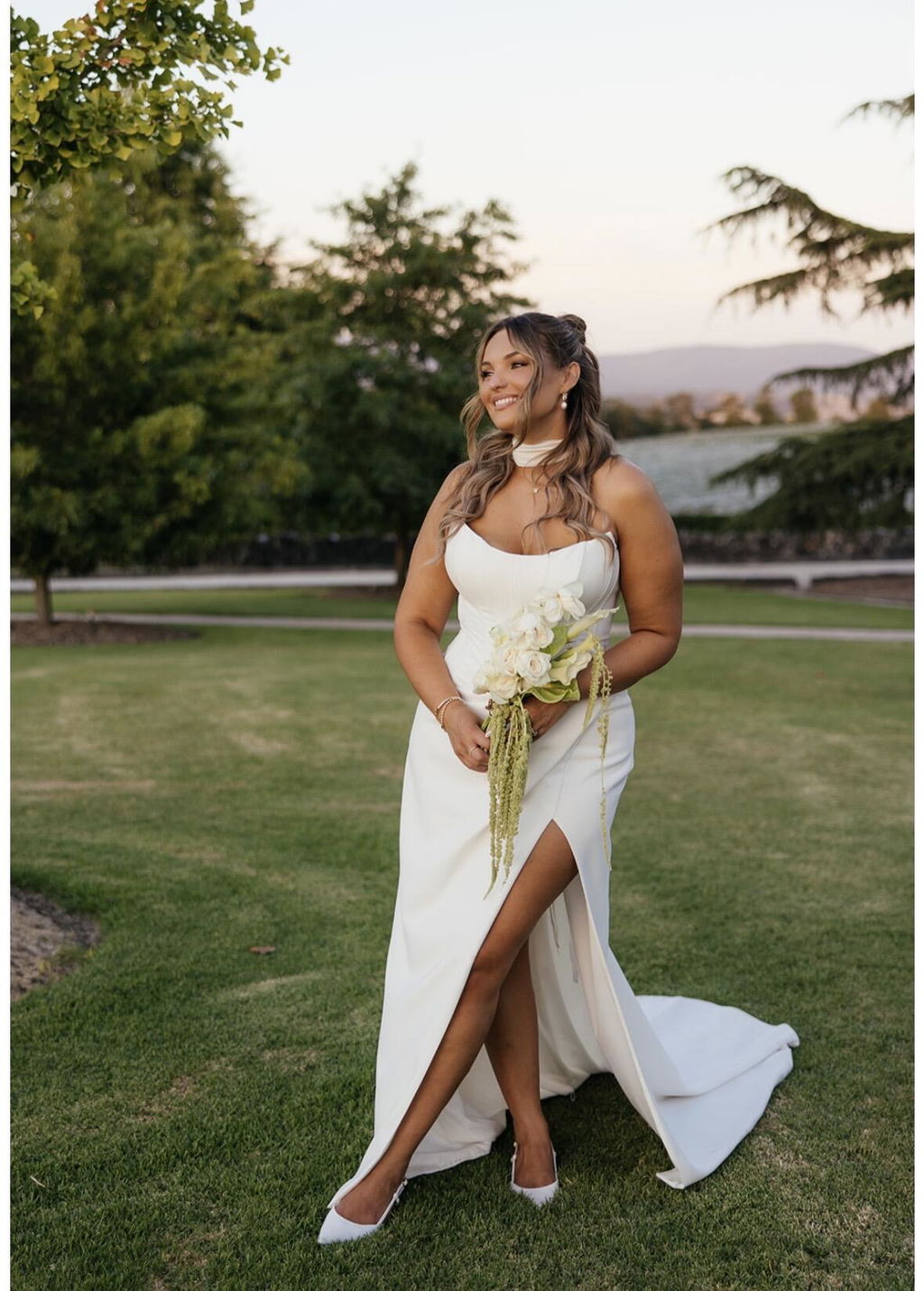
Loose, brushed-out waves pair with almost any fascinator and look relaxed under a brimmed hat. Keep the waves starting from around cheekbone level down, so the top stays smooth where the headpiece sits. Waves need length to read properly.
Polished half-up
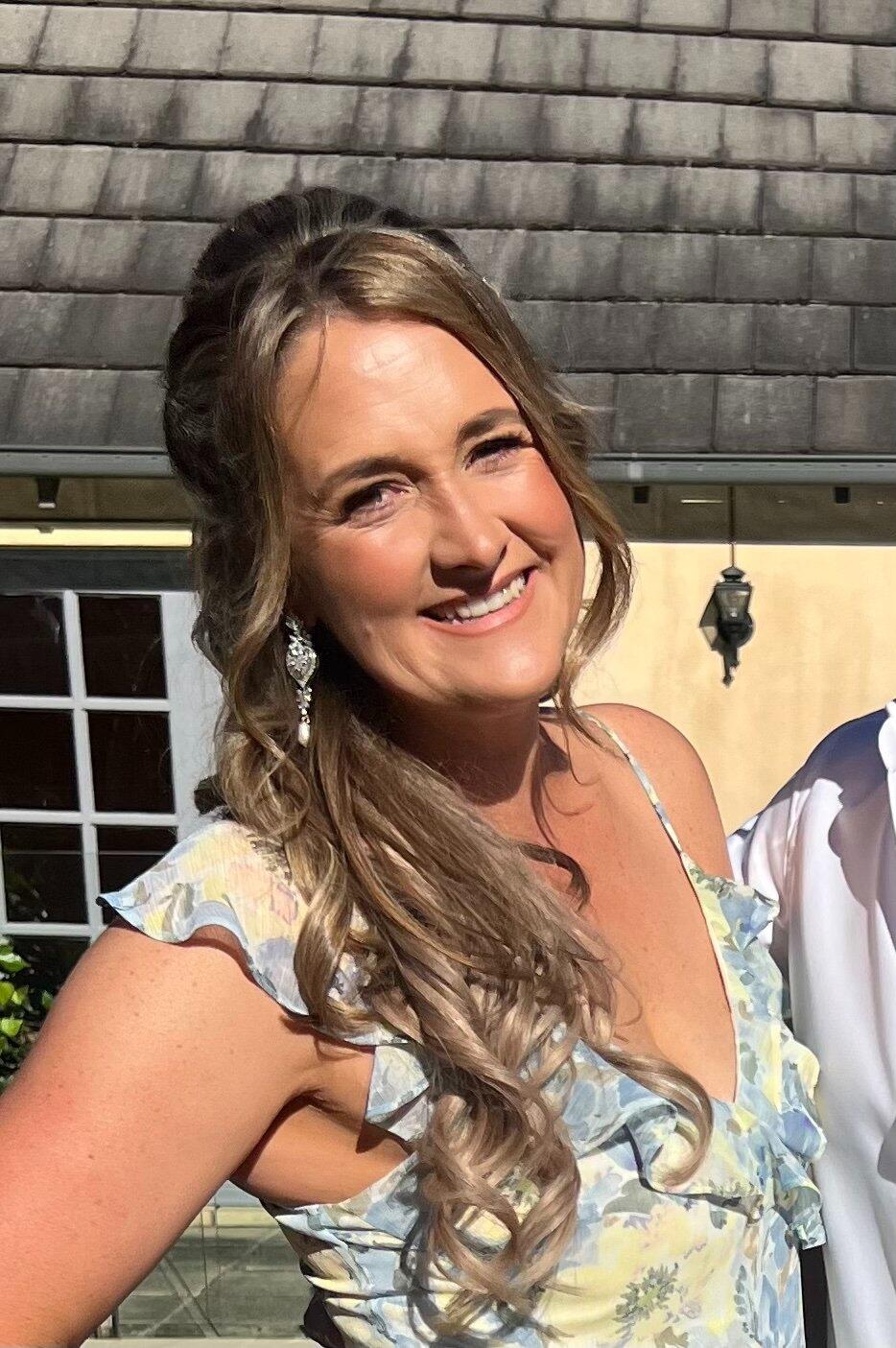
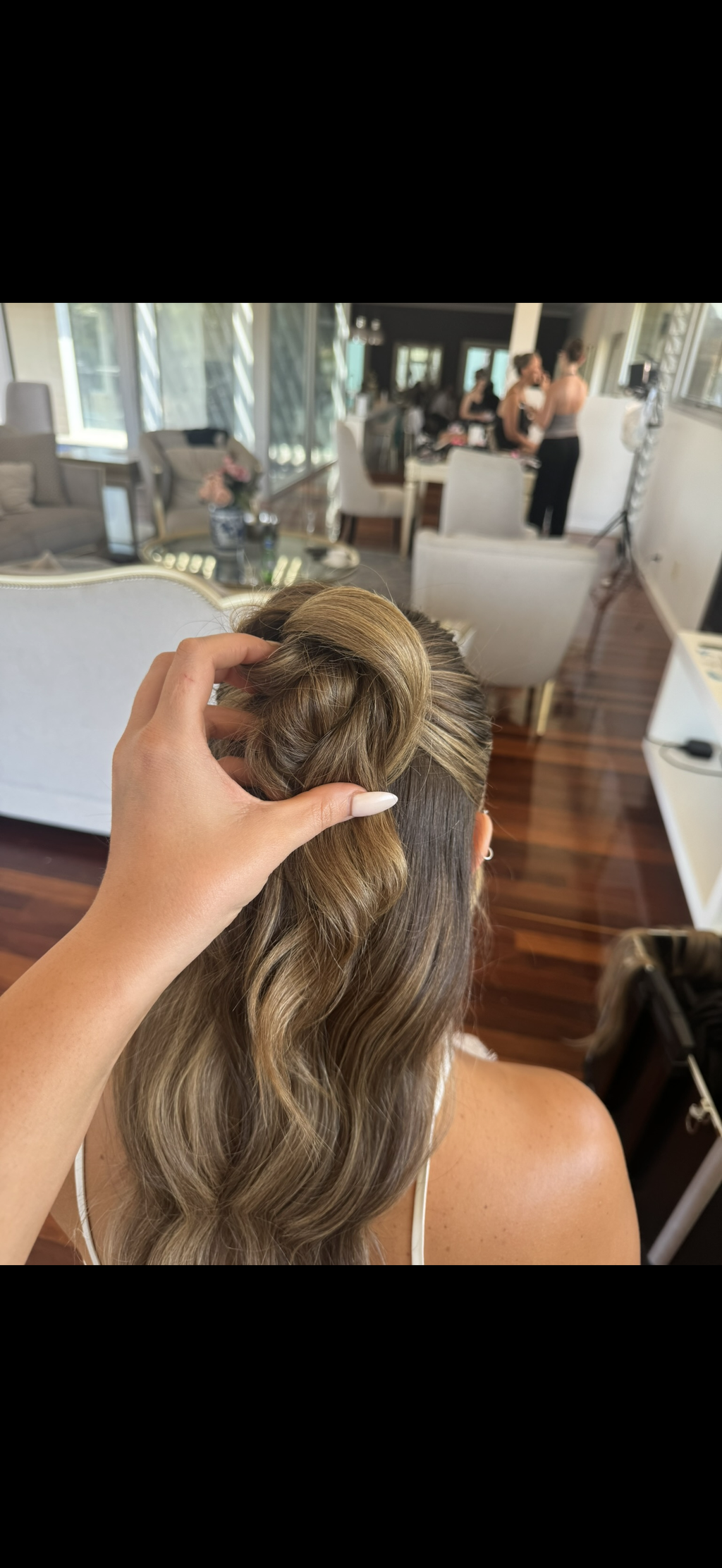
Taking the top section back and securing it at the crown gives a fascinator something firm to clip into, and keeps hair off your face in the wind. The half-up hairstyle with a fascinator is probably the most practical race day look there is. The lengths left down need fullness, or the style looks thin from behind.
Sleek low ponytail
A low pony at the nape leaves the whole crown free for a hat or a statement headpiece, and it is the most wind-proof option on this list.
| Style | Best headwear | How it handles wind | Extension that suits it |
|---|---|---|---|
| Soft waves | Side fascinator, brimmed hat | Most exposed; needs good hold | Halo or clip-ins |
| Polished half-up | Fascinator on comb or clip | Front stays put; lengths move | Classic or seamless clip-ins |
| Sleek low ponytail | Any hat, pillbox, headband | Most secure of the three | Wrap-around ponytail |
Why length and fullness lift every race day look
Every one of these styles looks more intentional with more hair. Waves on shoulder-length hair tend to bounce out into a bob shape. A half-up style on fine hair leaves a sparse tail. A low pony on medium hair can end up the width of a finger. Adding length and density is what makes a style look finished rather than improvised.
Quality matters here too. Superior Hair extensions are 100% Remy human hair, meaning the cuticles all run the same direction. That keeps the hair from tangling against itself in the wind, and lets you curl, straighten and style it with hot tools just like your own hair. If you are unsure which length will look natural against your own, the hair length guide shows where each length falls on the body.
Clip-ins, Halo or ponytail: which suits race day?
For a one-day event, semi-permanent methods like tape-ins are more than you need. Temporary, ready-to-wear pieces are the better fit. Here is how the three main options compare.
Halo weft: fastest full-head volume
A Halo is a single wide weft on a clear wire that sits around the crown, held by tension rather than clips. The Classic Halo comes with a 10 inch main piece plus two 4 inch clip-in wefts for blending at the sides, in 140g or 180g sets, and goes in in under a minute. You choose from six wire sizes for a comfortable fit. It works best on hair that is at least shoulder length, so there is enough to cover the wire. With no clips at the crown, most fascinators sit happily in front of the wire.
Classic and seamless clip-ins: most flexible for styling
Clip-ins let you place hair exactly where the style needs it, which makes them the strongest option for a half-up look. Classic clip-in extensions come as 9-piece sets from 105g to 145g, on a fabric weft that grips well and suits regular to medium hair. Seamless clip-ins use thin silicone wefts that lie flatter, with more hair per set (160g to 240g across 10 pieces), so they suit thicker hair and half-up styles where a weft might peek through at the parting.
Wrap-around ponytail: the sleekest low pony
The ponytail extensions have a velcro base that closes around your own ponytail, then a long strand of hair wraps over the base and is secured with two matching bobby pins. It takes less than three minutes and comes in 20 inch (120g) and 26 inch (160g). It suits thin to thick hair, as long as you can gather a small ponytail at the nape.
Any of these can last up to a year with proper care, so the set you buy for the Cup will see you through Christmas parties, weddings and next year's carnival as well.
Not sure of your shade?
Shade is what makes extensions invisible or obvious, especially in bright outdoor light. Get matched before you order so there is no guesswork on the day.
Get your colour matchYour race day get-ready routine, step by step
This is the routine that works for soft waves or a half-up look with a fascinator. Give yourself 45 minutes, and do a full practice run in the week before.
- Start with dry, second-day hair. Freshly washed hair is slippery and drops curl fast. Hair washed the day before grips clips and holds a wave far better.
- Curl the extensions first. Apply heat protectant, then curl the pieces off your head while they are easy to handle. Keep tools at or below about 180C. Let each curl cool fully before touching it, because cooling is what sets the shape. Our guide on how to curl hair extensions covers wand and iron technique in detail.
- Fit the extensions. Place your Halo or clip-ins. Keep the top rows a finger's width below where your fascinator comb will sit, so the headpiece grips your natural hair rather than a weft.
- Curl your own hair to match. Use the same barrel size and direction so your hair and the extensions blend into one pattern.
- Brush out and set. Once everything is cool, run your fingers or a wide-tooth comb through to soften the waves, then mist with a flexible hold spray.
- Pin in the fascinator. Slide the comb in against the direction of growth, then cross two bobby pins over the comb or clip to lock it in.
- Do the spin test. Turn your head quickly side to side and give a full twirl in front of the mirror. If anything shifts, re-pin it now, not in the car park.
How to make race day hair last all day
Long lasting event hair comes down to prep and finishing, not how much spray you use.
- Heat protectant every time. Extensions are human hair but no longer get natural oils from your scalp, so heat damage builds up. Protect before every pass of the tool.
- Flexible hold, not helmet hold. A brushable hairspray keeps waves in place but still moves when the wind catches it. Stiff sprays crack and look crunchy by the afternoon.
- Shine spray last. A light mist of shine spray at the end takes away the flat, dry look that bright sun exposes.
- Choose alcohol-free and sulphate-free products. Both strip moisture from extension hair and shorten its life.
- Pack a small kit. A few bobby pins, a mini hairspray and a small brush or comb in your clutch will fix most mid-afternoon problems.
If you want specific product suggestions, our roundup of favourite NAK hair products for extensions is a good starting point. Humidity is the one thing no product fully beats, so on a muggy day lean towards the half-up or low ponytail, which hold their shape even when the curl softens.
Hair that photographs well from every angle
Race day photos are rarely taken straight on, so check every angle:
- Check the back view. Use a hand mirror or a phone photo. This is where a visible weft shows up.
- Match the root shade. Outdoor light is harsh and shows colour differences that look invisible indoors. Balayage and rooted shades blend more forgivingly if your own hair has grown out a little.
- Blend the ends. If your hair is much shorter than the extensions, curl both together so the line where your hair ends disappears into the wave.
- Keep the part tidy. Smooth flyaways along the parting and around the fascinator, since these sit right in the middle of most photos.
Race day volume in under a minute
The Classic Halo adds full-head length and fullness with no clips at the crown, so your fascinator has room to sit.
Shop Classic Halo extensions →Not at the track? Cup Day lunches, weddings and summer events
Cup Day is a public holiday in most of Victoria, but in the rest of Australia it is a regular working day. So many people celebrate at long lunches, office sweeps and backyard parties instead, and the same styles work just as well there.
These looks carry straight into the rest of the season too. A half-up style with a headpiece suits a summer wedding, soft waves work for Christmas parties, and a sleek low pony holds up at an outdoor event in January heat. If you are a guest at a wedding this summer, our guide to bridesmaid hairstyles inspired by current trends has more ideas. Save this page for next spring too.
Race day hair FAQs
What is the best race day hair for a fascinator?
A polished half-up style is the most practical race day hair for a fascinator. Securing the top section at the crown gives the comb or clip firm hair to grip, and keeps strands off your face in the wind. Soft waves left down also work well, as long as the top stays smooth where the fascinator sits.
Can I wear clip-in extensions under a hat or fascinator?
Yes. Place the top row of clip-ins a finger's width below where the hat band or fascinator comb will sit, so the headwear anchors into your natural hair rather than a weft. A Halo is another good option, since it has no clips at the crown and most headpieces sit comfortably in front of the wire.
Which Melbourne Cup hairstyles hold up best in the wind?
A sleek low ponytail is the most wind-proof of the classic Melbourne Cup hairstyles, because all the length is gathered at the nape. A half-up style is next, since the front sections are secured. Loose waves are the most exposed, so finish them with a flexible hold hairspray and pack bobby pins for touch-ups.
How long does it take to put in race day hair extensions?
A Halo can be fitted in under a minute, and a wrap-around ponytail in less than three minutes. A full set of clip-ins usually takes a little longer while you section and place each piece. Curling the extensions before you fit them saves the most time on the morning of the event.
Can I reuse race day hair extensions for other events?
Yes. Clip-ins, Halos and ponytail extensions are made from 100% Remy human hair and can be worn again and again. With gentle, sulphate-free care and heat protection every time you style them, they can last up to a year, so the same set works for weddings, Christmas parties and next spring's carnival.