
Race Day Hair: Styles That Work with a Fascinator and Last All Day
Quick answer
The best race day hair is a low, secured style that gives your fascinator something solid to grip: a sculpted low bun, a sleek low ponytail, a side chignon or a pinned half-up. Prep with texture spray, anchor the fascinator to a crossed bobby-pin base, and add clip-in volume underneath for grip.
Race day hair has a harder job than most occasion styles. It has to hold a fascinator at an angle from the first race to the last, survive a gusty afternoon at Flemington or Randwick, and still look intentional in the photos you take on the way home. The good news is that the styles that last longest are also the easiest to wear a fascinator with. Here is how to choose one, build it properly, and keep it in place all day.
In this guide
Why does race day hair come undone?
Most race day styles fail for one of three reasons, and none of them is bad luck.
Leverage. A fascinator sits off to one side, often tilted forward, and every time you turn your head it pulls on whatever is holding it. If the comb is gripping a few loose strands, those strands lose. By mid-afternoon the piece has slid back and the hair around it has gone flat.
Slip. Freshly washed, silky hair looks lovely and holds nothing. Pins slide out, combs drift, and curls drop within an hour or two. Hair needs some grit before it will take a fascinator.
Weather. Spring racing weather changes fast. Wind lifts anything loose at the crown, humidity relaxes curls, and a light shower can turn smooth lengths frizzy. A style that only works in still, dry air is a gamble.
The fix for all three is the same: build texture, give the fascinator a secure anchor, and keep the bulk of the hair low and contained. Low styles keep the weight close to your neck, so there is less for the wind to catch and less pull on the fascinator above.
Need more hair to work with?
Ready-to-wear extensions go in at home and come out at the end of the night, so you can build a fuller updo for one big day without a salon appointment.
Browse ready-to-wear hair extensions →Match your hairstyle to your fascinator

Choose the headpiece first, then the hair. How a fascinator attaches decides where it needs support and which styles will fight it.
| Fascinator type | How it attaches | Best styles | Watch out for |
|---|---|---|---|
| Headband fascinator | Thin band over the crown, ends tucked behind the ears | Sleek low ponytail, low bun, soft waves worn down | Band flattening crown volume; band sliding forward on smooth hair |
| Comb or clip fascinator | Comb slides into the hair on one side | Sculpted chignon, pinned half-up, braided updo | Clean, slippery hair; no pinned anchor underneath |
| Percher or button hat | Fine elastic worn under the hair at the back | Low chignon, low side ponytail | Elastic needs hair at the nape to hide under |
| Crown or wide headpiece | Sits around the head, often with combs at each side | Braided crown, half-up, soft waves | Heavier pieces dragging on fine hair |
Most people wear a fascinator on the right side, tilted slightly forward, though there is no strict rule. Whichever side you pick, decide before you style. That side needs the most texture and the anchor point, and it is where you should avoid clipping any extension weft directly under the comb.
Six race day hairstyles that last all day
Each of these keeps the weight low and gives the fascinator a firm base.
1. The sculpted low bun
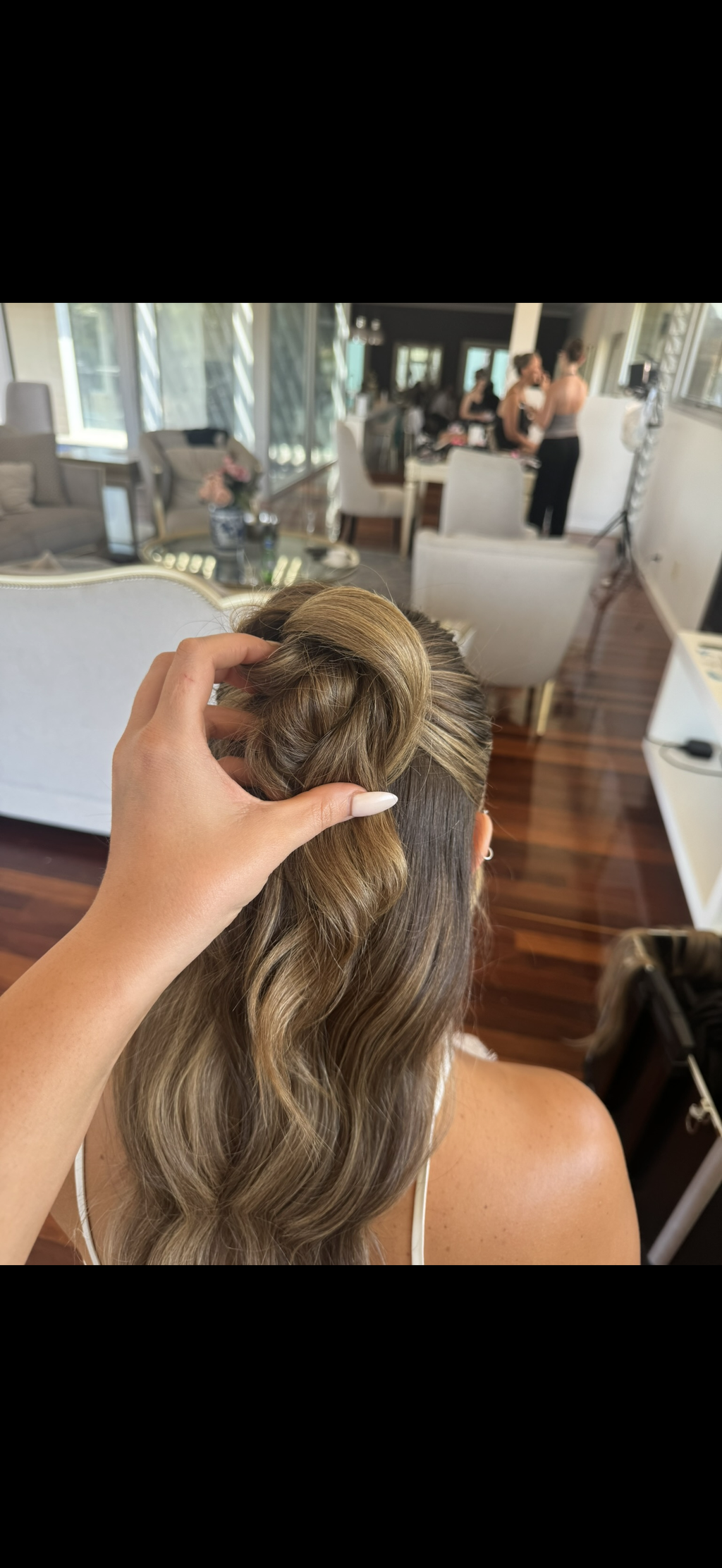
The most reliable race day style. Brush the hair back with a little smoothing cream, secure it at the nape with a strong elastic, then twist and coil it into a bun and pin through the base in several directions. A sleek finish suits a structured headband; a slightly looser, pulled-out bun suits a feathered or floral piece. If your hair is fine or shoulder length, a messy bun extension wraps over a small bun of your own hair and gives you a full updo in minutes.
2. The side-swept low chignon
Set the chignon at the nape, slightly off-centre on the side opposite your fascinator, so the two balance each other in photos. Leave the hair over the fascinator side smooth and pinned flat above the ear. This works especially well with comb fascinators and perchers that need hair at the back to hide an elastic.
3. The sleek low ponytail
Clean and modern, and a good match for headband fascinators. Gather everything at the nape, wrap a small section around the elastic and pin it underneath. A low ponytail barely moves in a breeze. For more length and swing than your own hair gives, Superior Hair's wrap-around human hair ponytail extensions come in 20 inch (120g) and 26 inch (160g) and attach around a small ponytail of your own.
4. The pinned half-up
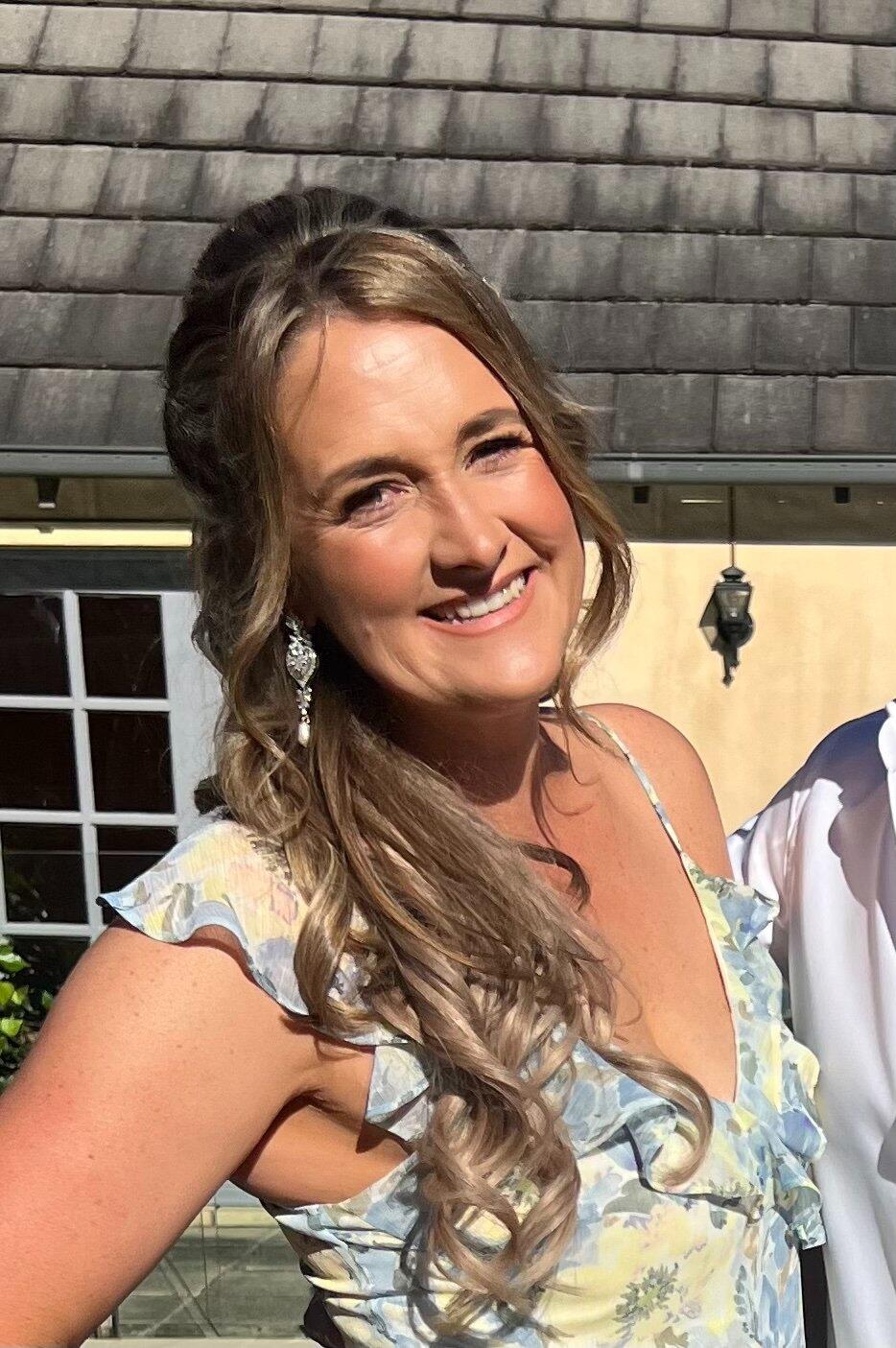
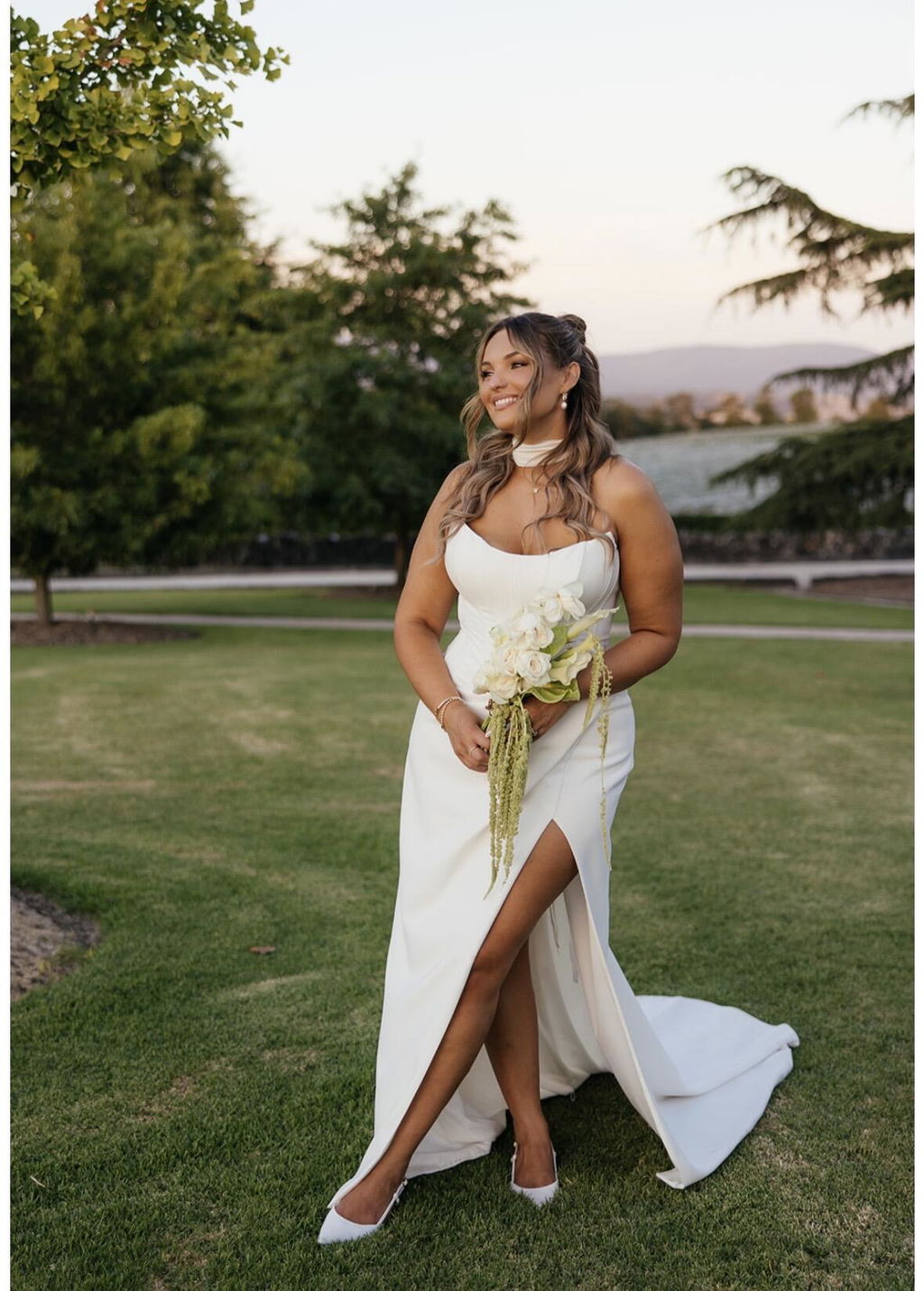
For anyone who wants hair down without it blowing across the face. Take the top section back, twist it slightly and secure it with two bobby pins crossed in an X. That X becomes the anchor for a comb fascinator. Leave the lengths loose or softly waved. If you wear a halo, keep the fascinator comb in your own secured hair rather than near the wire.
5. Soft waves, pinned back on one side
Hair worn down is the riskiest choice for a long day, but it can work. Curl in larger sections, let each curl cool completely before you touch it, then brush through gently and set with a firm-hold spray. Sweep the fascinator side back behind the ear and pin it flat so the headpiece has a smooth base. Our guide on how to curl hair extensions covers getting waves that hold in both your own hair and the added lengths.
6. The braided crown or braided low bun
Braids are the secret weapon for windy days. A Dutch braid along one side, finished into a low bun, gives a fascinator comb a tight surface to bite into and almost nothing for the wind to lift. Gently pull the braid loops wider for a softer finish, then spray.
Not sure of your shade?
A bun or ponytail piece has to blend at the base, where everyone can see it. Send a photo in natural light and the Superior Hair team will match your shade for free before you order.
Get a free colour matchWhere extensions earn their place on race day
Extensions do more on race day than add length. Extra density gives pins and combs more to hold, which is often the difference between a fascinator that stays put and one that drifts.
Clip-ins for volume and grip
Classic clip-ins come as 9-piece sets and take under five minutes to put in. For an updo, place the wefts in rows below the crown so the clips sit hidden inside the bun or ponytail, and backcomb lightly over each clip so it has something to lock onto. Skip the exact spot where the fascinator comb goes; it needs your own hair. If you are new to them, our walkthrough on how to apply clip-in hair extensions shows placement row by row.
Halo or clip-ins?
A classic halo is the fastest option and is best for hair worn down or half-up. For updos, clip-ins are the better pick, because each weft can be placed where the style needs it and a halo wire can show when hair is pulled back.
Matching the colour where it shows
In an updo the join is visible from the side and the back, so shade matters more than it does with loose hair. Superior Hair offers 40+ shades, including highlights and balayage tones. If you are between two shades, the colour ring and swatches let you hold real hair samples against your own at home.
Already wearing semi-permanent extensions?
If you have tape-ins or wefts, tell your stylist you plan to wear your hair up. Very high, scraped-back styles can expose bonds, while a low, textured bun or chignon usually hides them well. Ask your stylist to place the fascinator so its comb grips your natural hair, not a bond.
Prep the night before and the morning of
The night before
Wash your hair the day before, not the morning of. Second-day hair holds pins and curl far better. If you are wearing extensions, wash them too with a shampoo free of sulphates, parabens and alcohol, condition the mids and ends only, and let them dry completely before storing. The hair care guide has the full routine. Then do a practice run: put the fascinator on with your chosen style and turn your head quickly a few times. If it shifts at home, it will slide at the track.
The morning of
- Spray a heat protectant through your own hair and any extensions before using hot tools. Remy human hair can be curled and straightened like your own, but it still needs protecting.
- Mist a dry texture spray from roots to mid-lengths. This is what gives combs and pins their grip.
- Build the style, then create the anchor: two bobby pins crossed in an X, flat against the head where the fascinator will sit.
- Slide the comb under the X, or for a headband, pin through the band behind each ear with a pin that matches your hair colour.
- Finish with a fine-mist hairspray, held at arm's length so it sets without going crunchy.
Your race day hair survival kit
Even a well-built style needs a touch-up by mid-afternoon. Pack these in your clutch.
- Six to eight spare bobby pins in your hair colour
- A travel-size hairspray
- A small tail comb for smoothing flyaways
- A spare clear elastic in case a ponytail loosens
- A small pouch to hold clip-ins if you take them out later in the evening
At the end of the day, take out every pin before you brush. Remove clip-ins from the top row down, brush them gently from the ends upward, and store them dry, away from direct sunlight, so they are ready for the next event on your calendar.
Build a race day updo that holds
Classic clip-ins add the density a bun or chignon needs to grip a fascinator, and they go in at home in minutes.
Shop classic clip-in extensions →Race day hair FAQ
What is the best hairstyle to wear with a fascinator?
A low, secured style works best with a fascinator. A sculpted low bun, side chignon or sleek low ponytail keeps the weight near your neck and leaves the side of your head smooth for the fascinator to sit on. These styles also hold up to wind far better than loose hair, so they still look neat at the last race.
How do you keep a fascinator in place all day?
Give it an anchor. Add dry texture spray where the fascinator will sit, cross two bobby pins in an X flat against your head, and slide the comb under the X. For a headband fascinator, pin through the band behind each ear. Second-day hair also grips better than freshly washed hair, so wash the day before.
Which side should a fascinator go on?
Most people wear a fascinator on the right side, tilted slightly forward, but there is no strict rule. Choose the side that suits your parting and face shape. Decide before you style, so you can build texture and your anchor pins on that side and keep any chignon or ponytail balanced on the opposite side.
Can you wear clip-in extensions with a fascinator?
Yes, and they often help. Clip-in extensions add density, which gives bobby pins and fascinator combs more hair to grip. Place the wefts below the crown so the clips hide inside your updo, and keep the exact spot where the fascinator comb sits in your own hair. For updos, clip-ins are more versatile than a halo.
How do I stop race day hair dropping in wind or humidity?
Choose a low, contained style, use texture spray for grip, and let every curl cool completely before brushing it out. Braids and low buns resist wind best. Finish with a fine-mist hairspray and carry spare pins and a travel spray, so you can smooth flyaways after a few hours outdoors.
Should I wear my hair up or down to the races?
Up is the safer choice for a full day at the races, because updos hold a fascinator securely and handle wind and humidity better. If you prefer hair down, a pinned half-up or soft waves swept back on the fascinator side is a good middle ground that still gives the headpiece a stable base.