
Skip to content
SAME DAY DISPATCH BEFORE 12PM
FREE SHIPPING OVER $200
FREE COLOUR MATCH

Race Day Hair: Styles That Work with a Fascinator and Last All Day

Quick answer

The best race day hair is a low, secured style that gives your fascinator something solid to grip: a sculpted low bun, a sleek low ponytail, a side chignon or a pinned half-up. Prep with texture spray, anchor the fascinator to a crossed bobby-pin base, and add clip-in volume underneath for grip.

Race day hair has a harder job than most occasion styles. It has to hold a fascinator at an angle from the first race to the last, survive a gusty afternoon at Flemington or Randwick, and still look intentional in the photos you take on the way home. The good news is that the styles that last longest are also the easiest to wear a fascinator with. Here is how to choose one, build it properly, and keep it in place all day.

Why does race day hair come undone?

Most race day styles fail for one of three reasons, and none of them is bad luck.

Leverage. A fascinator sits off to one side, often tilted forward, and every time you turn your head it pulls on whatever is holding it. If the comb is gripping a few loose strands, those strands lose. By mid-afternoon the piece has slid back and the hair around it has gone flat.

Slip. Freshly washed, silky hair looks lovely and holds nothing. Pins slide out, combs drift, and curls drop within an hour or two. Hair needs some grit before it will take a fascinator.

Weather. Spring racing weather changes fast. Wind lifts anything loose at the crown, humidity relaxes curls, and a light shower can turn smooth lengths frizzy. A style that only works in still, dry air is a gamble.

The fix for all three is the same: build texture, give the fascinator a secure anchor, and keep the bulk of the hair low and contained. Low styles keep the weight close to your neck, so there is less for the wind to catch and less pull on the fascinator above.

Need more hair to work with?

Ready-to-wear extensions go in at home and come out at the end of the night, so you can build a fuller updo for one big day without a salon appointment.

Browse ready-to-wear hair extensions →

Match your hairstyle to your fascinator

Choose the headpiece first, then the hair. How a fascinator attaches decides where it needs support and which styles will fight it.

Fascinator type How it attaches Best styles Watch out for
Headband fascinator Thin band over the crown, ends tucked behind the ears Sleek low ponytail, low bun, soft waves worn down Band flattening crown volume; band sliding forward on smooth hair
Comb or clip fascinator Comb slides into the hair on one side Sculpted chignon, pinned half-up, braided updo Clean, slippery hair; no pinned anchor underneath
Percher or button hat Fine elastic worn under the hair at the back Low chignon, low side ponytail Elastic needs hair at the nape to hide under
Crown or wide headpiece Sits around the head, often with combs at each side Braided crown, half-up, soft waves Heavier pieces dragging on fine hair

Most people wear a fascinator on the right side, tilted slightly forward, though there is no strict rule. Whichever side you pick, decide before you style. That side needs the most texture and the anchor point, and it is where you should avoid clipping any extension weft directly under the comb.

Six race day hairstyles that last all day

Each of these keeps the weight low and gives the fascinator a firm base.

1. The sculpted low bun

The most reliable race day style. Brush the hair back with a little smoothing cream, secure it at the nape with a strong elastic, then twist and coil it into a bun and pin through the base in several directions. A sleek finish suits a structured headband; a slightly looser, pulled-out bun suits a feathered or floral piece. If your hair is fine or shoulder length, a messy bun extension wraps over a small bun of your own hair and gives you a full updo in minutes.

2. The side-swept low chignon

Set the chignon at the nape, slightly off-centre on the side opposite your fascinator, so the two balance each other in photos. Leave the hair over the fascinator side smooth and pinned flat above the ear. This works especially well with comb fascinators and perchers that need hair at the back to hide an elastic.

3. The sleek low ponytail

Clean and modern, and a good match for headband fascinators. Gather everything at the nape, wrap a small section around the elastic and pin it underneath. A low ponytail barely moves in a breeze. For more length and swing than your own hair gives, Superior Hair's wrap-around human hair ponytail extensions come in 20 inch (120g) and 26 inch (160g) and attach around a small ponytail of your own.

4. The pinned half-up

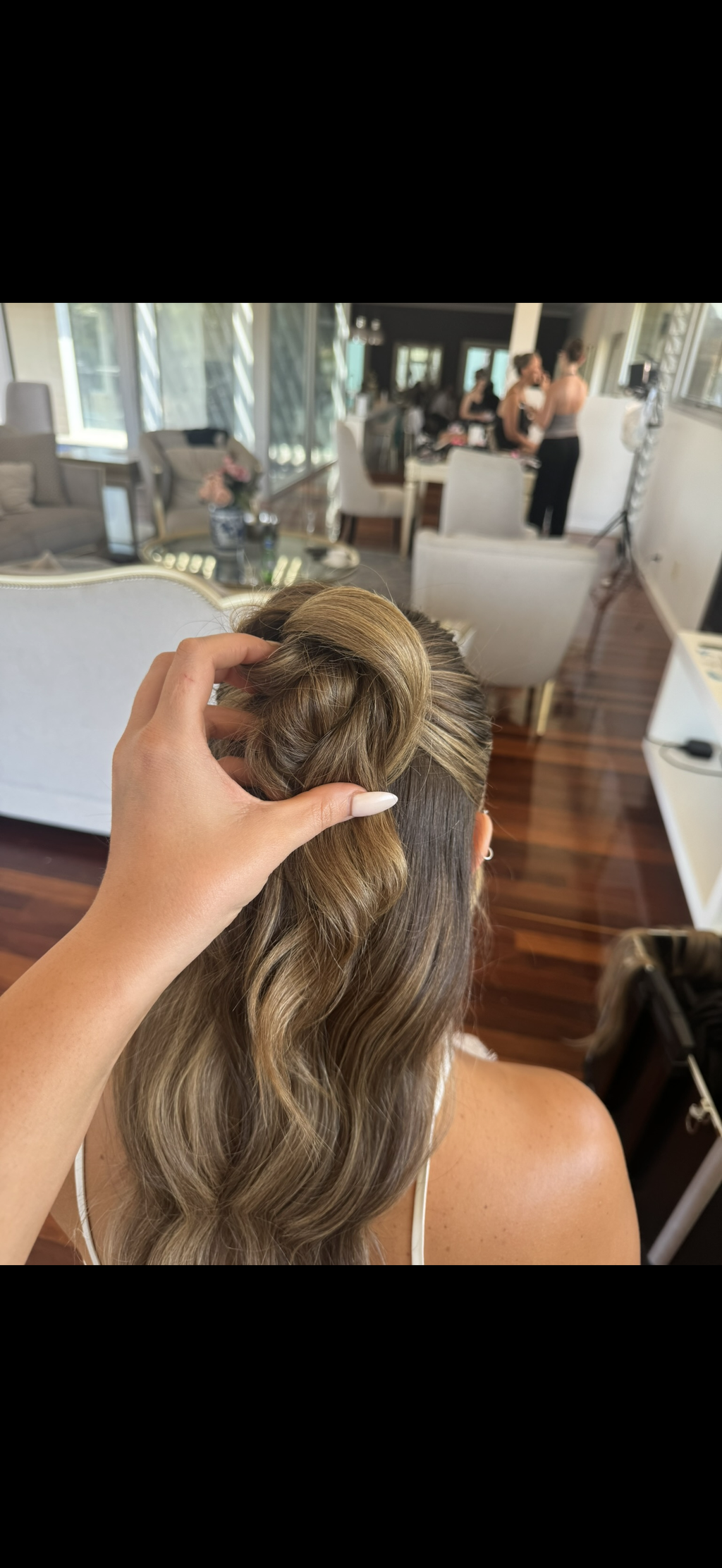
For anyone who wants hair down without it blowing across the face. Take the top section back, twist it slightly and secure it with two bobby pins crossed in an X. That X becomes the anchor for a comb fascinator. Leave the lengths loose or softly waved. If you wear a halo, keep the fascinator comb in your own secured hair rather than near the wire.

5. Soft waves, pinned back on one side

Hair worn down is the riskiest choice for a long day, but it can work. Curl in larger sections, let each curl cool completely before you touch it, then brush through gently and set with a firm-hold spray. Sweep the fascinator side back behind the ear and pin it flat so the headpiece has a smooth base. Our guide on how to curl hair extensions covers getting waves that hold in both your own hair and the added lengths.

6. The braided crown or braided low bun

Braids are the secret weapon for windy days. A Dutch braid along one side, finished into a low bun, gives a fascinator comb a tight surface to bite into and almost nothing for the wind to lift. Gently pull the braid loops wider for a softer finish, then spray.

Not sure of your shade?

A bun or ponytail piece has to blend at the base, where everyone can see it. Send a photo in natural light and the Superior Hair team will match your shade for free before you order.

Get a free colour match

Where extensions earn their place on race day

Extensions do more on race day than add length. Extra density gives pins and combs more to hold, which is often the difference between a fascinator that stays put and one that drifts.

Clip-ins for volume and grip

Classic clip-ins come as 9-piece sets and take under five minutes to put in. For an updo, place the wefts in rows below the crown so the clips sit hidden inside the bun or ponytail, and backcomb lightly over each clip so it has something to lock onto. Skip the exact spot where the fascinator comb goes; it needs your own hair. If you are new to them, our walkthrough on how to apply clip-in hair extensions shows placement row by row.

Halo or clip-ins?

A classic halo is the fastest option and is best for hair worn down or half-up. For updos, clip-ins are the better pick, because each weft can be placed where the style needs it and a halo wire can show when hair is pulled back.

Matching the colour where it shows

In an updo the join is visible from the side and the back, so shade matters more than it does with loose hair. Superior Hair offers 40+ shades, including highlights and balayage tones. If you are between two shades, the colour ring and swatches let you hold real hair samples against your own at home.

Already wearing semi-permanent extensions?

If you have tape-ins or wefts, tell your stylist you plan to wear your hair up. Very high, scraped-back styles can expose bonds, while a low, textured bun or chignon usually hides them well. Ask your stylist to place the fascinator so its comb grips your natural hair, not a bond.

Prep the night before and the morning of

The night before

Wash your hair the day before, not the morning of. Second-day hair holds pins and curl far better. If you are wearing extensions, wash them too with a shampoo free of sulphates, parabens and alcohol, condition the mids and ends only, and let them dry completely before storing. The hair care guide has the full routine. Then do a practice run: put the fascinator on with your chosen style and turn your head quickly a few times. If it shifts at home, it will slide at the track.

The morning of

  • Spray a heat protectant through your own hair and any extensions before using hot tools. Remy human hair can be curled and straightened like your own, but it still needs protecting.
  • Mist a dry texture spray from roots to mid-lengths. This is what gives combs and pins their grip.
  • Build the style, then create the anchor: two bobby pins crossed in an X, flat against the head where the fascinator will sit.
  • Slide the comb under the X, or for a headband, pin through the band behind each ear with a pin that matches your hair colour.
  • Finish with a fine-mist hairspray, held at arm's length so it sets without going crunchy.

Your race day hair survival kit

Even a well-built style needs a touch-up by mid-afternoon. Pack these in your clutch.

  • Six to eight spare bobby pins in your hair colour
  • A travel-size hairspray
  • A small tail comb for smoothing flyaways
  • A spare clear elastic in case a ponytail loosens
  • A small pouch to hold clip-ins if you take them out later in the evening

At the end of the day, take out every pin before you brush. Remove clip-ins from the top row down, brush them gently from the ends upward, and store them dry, away from direct sunlight, so they are ready for the next event on your calendar.

Build a race day updo that holds

Classic clip-ins add the density a bun or chignon needs to grip a fascinator, and they go in at home in minutes.

Shop classic clip-in extensions →

Race day hair FAQ

What is the best hairstyle to wear with a fascinator?

A low, secured style works best with a fascinator. A sculpted low bun, side chignon or sleek low ponytail keeps the weight near your neck and leaves the side of your head smooth for the fascinator to sit on. These styles also hold up to wind far better than loose hair, so they still look neat at the last race.

How do you keep a fascinator in place all day?

Give it an anchor. Add dry texture spray where the fascinator will sit, cross two bobby pins in an X flat against your head, and slide the comb under the X. For a headband fascinator, pin through the band behind each ear. Second-day hair also grips better than freshly washed hair, so wash the day before.

Which side should a fascinator go on?

Most people wear a fascinator on the right side, tilted slightly forward, but there is no strict rule. Choose the side that suits your parting and face shape. Decide before you style, so you can build texture and your anchor pins on that side and keep any chignon or ponytail balanced on the opposite side.

Can you wear clip-in extensions with a fascinator?

Yes, and they often help. Clip-in extensions add density, which gives bobby pins and fascinator combs more hair to grip. Place the wefts below the crown so the clips hide inside your updo, and keep the exact spot where the fascinator comb sits in your own hair. For updos, clip-ins are more versatile than a halo.

How do I stop race day hair dropping in wind or humidity?

Choose a low, contained style, use texture spray for grip, and let every curl cool completely before brushing it out. Braids and low buns resist wind best. Finish with a fine-mist hairspray and carry spare pins and a travel spray, so you can smooth flyaways after a few hours outdoors.

Should I wear my hair up or down to the races?

Up is the safer choice for a full day at the races, because updos hold a fascinator securely and handle wind and humidity better. If you prefer hair down, a pinned half-up or soft waves swept back on the fascinator side is a good middle ground that still gives the headpiece a stable base.


News

How to Properly Care for Your Hair Extensions and Wigs

How to Properly Care for Your Hair Extensions and Wigs

It is important that you take care of your hair extensions on a regular basis. While hair extensions are made out of real human hair are easy to style and maintain, they require a certain level of care to lessen the growth of bacteria or fungus, prevent the build-up of dandruff and minimize any other negative effect it might have on your scalp.  Below are some simple yet effective ways for you to take care of your hair extension and wig. How to Care for your Hair Extensions 1. Wash your Hair Extensions regularly Everyday your hair extensions are exposed to a variety of elements as you go about your daily activities. To lessen or prevent the build-up of dirt or debris you need to practice proper hair care. You need to wash your hair extension every 2 to 3 days if they are permanently or semi-permanently attached to your head. If they are clipped in temporarily, then you need to wash your hair 1 to 2 times per month.  Additionally, you have to use the right hair care products and routine to prevent damage. This way, your hair will remain in good condition, look great and last longer. 2. Pack your hair before sleeping, exercising or swimming It is extremely important that you pack your hair properly before sleeping, exercising or swimming. Your hair can tangle and form tight knots that are difficult to loosen during these activities. This can lead to hair damage and breakage as you try to fix the problem. Simply brushing your hair before braiding or making a ponytail will keep your hair in place & prevent any surprises. Remember, to dry your hair properly before you brush, style and braid your hair. This will not only protect your hair but make things easier and leave you with a sleek looking hair extension. 3. Avoid Excess Heat Constant use of heated tools such as a hot roller or iron can damage the bonds or clips of your synthetic hair. To prevent hair damage and breakage, be sure to use a heat protection spray or allow your hair to air dry. Be sure to use your heating tools at the appropriate heating temperature to straighten your hair and limit any side effects whatsoever.    4. Use a conditioner regularly Your hair extensions do not benefit from the moisturizing and protective benefits of the natural oils (sebum) your scalp produces. To prevent dryness you have to regularly apply restorative conditioner to your hair extensions at least two to three times before shampooing. 5. Avoid Chemicals in your Hair Products The content of your hair care products also matters a lot. Chemicals like sulphates and parabens can strip your hair extensions from its oil, moisture and infiltrate your body. Hair Care Products that are sulphate, paraben and sodium chloride-free will leave your hair extensions in perfect condition while protecting you from any harmful side effects.

Learn more
Hair Extension Myths Debunked: What You Need to Know

Hair Extension Myths Debunked: What You Need to Know

Common Hair Extension Myths Debunked In the past decade, hair extensions have become more accessible to women. Hair extensions are available in all kinds of textures, colours and types. One can use them to fake a bang, salvage a haircut that went wrong or elevate their daily look. However, there have been several concerns amongst the topic of hair extensions, making some of us hold back on exploring them.  The most common myths about hair extensions 1. Hair Extensions are Very Expensive Many people believe those hair extensions, especially those that are made of 100% human hair, would be too expensive to be afforded by the average person. Let us assure you that this may have been true several years ago when only celebrities could afford human hair extensions. Nowadays, you don't have to rob a bank to get a reasonably priced hair extension of excellent quality. Human hair extensions may be a bit pricier than their synthetic counterparts, but they make up for it through their duration and quality. What's more, they perfectly blend with natural hair, and if taken good care of, last a long time. 2. Hair Extensions Damage Natural Hair This is probably one of the main reasons why most women steer clear of installing hair extensions. However, professionally installed extensions don't affect your hair at all. The installation method and type of hair you go for also matters. If natural extensions are installed professionally, not only will they last longer, but they will also be comfortable and will allow your hair to grow. 3. Hair Extensions are Hard to Maintain Hair extensions save you from the stress of having to rush to your stylist every morning. If correctly installed, your hair extensions should not require professional care regularly. They are easy to take care of. For starters, patience is vital. Once you are well knowledgeable on how to apply and take care of them after installation, maintenance is a walk in the park! 4. Questionable Source of Human Hair Extensions For the longest time in history, people around the world have been donating their hair. Quality human hair extensions sold in reputable shops, Superior Hair included, are sourced from healthy regular people. What makes our extensions last is the fact that they aren't swept from the floors of temples and salons. Instead, they are sourced from donors with long, thick ponytails. 5. Hair Extensions Limit Your Workout Exercise Installing hair extensions does not mean you can't lead a healthy fit life. Taking precautions such as the use of correct products and tools should have you rocking your favourite style, even to the gym! If you are looking for a carefree option, then clip-ins will be your go-to. Not only are they unbelievably easy to install, but they also come in handy when you wish to sweat it out in the gym and not have to worry about how your hair looks. Long, healthy hair goals shouldn't be a farfetched dream anymore. Be sure to purchase your hair extensions from a trusted seller, and you can be assured of their quality. At Superior Hair, we strive to make your hair dreams a reality!

Learn more
Everything You Need To Know About Balayage with Superior Hair

Everything You Need To Know About Balayage with Superior Hair

  Everything You Need To Know About Balayage   What is Balayage? Balayage is a French colouring technique that was developed in the 1970s.The French meaning of Balayage is "to sweep” and is known for the way it displays soft highlights rather than a sharp stripy look. It's a freehand technique where the colour is applied by hand rather than using the traditional foiling or cap highlighting techniques. You know how when you were younger, your hair would go lighter from being in the sun, well, balayage gives off that exact sun-kissed natural looking hair colour!   Difference Between Balayage and Ombre Ombre is the process in which the hair is dyed in a gradation from dark to light which is why it’s original meaning is "shadow” in French. Ombre results in a lighter colour transition going from the mid-shaft of your hair to the ends and with darker hair from your roots to the mid-shaft. This means that there aren’t any dark bits of hair at the bottom as the hair is essentially just going from dark to light in the smoothest transition possible. This is completely different to the Balayage technique as with Balayage there are darker pieces left at the bottom which cause extra depth and dimension. There is also no clear fade between the darker and lighter colours when a balayage technique is used. This creates the final result of being a seamless blend of the highlights and your natural hair colour. Reasons to get Balayage Coloured Extensions Perfect Timing: With the hot seasons of Spring and Summer coming, now may be the perfect time to invest into a balayage colour. Balayage will add a natural glow and lighter tone to your hair, giving off the idea that you’ve been soaking up that hot summer sun for weeks!  Looks Amazing: If you are looking for a hair technique that amplifies the long, loose curl or glamorous beach look, then balayage will certainly glam up your style. With your favourite look and balayage combined you’ll be able to see the colour variations spiralling smoothly through to the ends of your hair.  Easy Maintenance: You don’t have to maintain the balayage, only the extensions! So your balayage colour is going to look fresh throughout the whole time you have your extensions. Just remember to get your extensions maintained every 6-8 weeks for the best results!

Learn more
10 Surprising Things You Didn’t Know About Hair

10 Surprising Things You Didn’t Know About Hair

  Do you have a nightly skin care routine? Of course you do. How about a hair care regime before bed?  Taking care of your hair is just as important as your nightly skincare routine. In fact, treating your hair at night time will help you make the most of your beauty sleep and achieve your hair goals. Hair care is even more important if you have invested money in quality hair extensions from Superior Hair Extensions because you know they need TLC to lengthen their lifespan. So let’s take a look at how you can change up your night-time hair care for the better. WHAT NOT TO DO We’re all guilty of going to sleep without much thought of our hair health. But there are some habits you should definitely break if you want to wake up with beautiful hair. 1. Don't go to bed with wet hair There are several reasons not to go to bed with wet hair – it can cause severe hair breakage, encourage bacteria growth on your pillow, cause hair loss, make you feel cold, and make your hair appear dull and harder to style.  If you do need to shower before bed, make sure you dry your hair before your head hits the pillow – we recommend using heat protectant and hair dryer to dry your hair.  3. Don't leave your hair tied up Leaving your hair tied up in a tight ponytail or bun can cause damage to your hair while you sleep, leaving you with broken hair around the area of the hair tie.  No one likes hair breakage, so if you do need to sleep with your hair tied up, make sure it’s in a braid, secured with bobby pins or wrapped in a loose bun.  4. Don't go to bef with hairspray on  Going to sleep with hairspray, gel or other styling product in your hair can result in transfer to your pillow, which overtime can build up and get on your face, ultimately blocking your pores and resulting in acne and pimples. WHAT TO DO There are a few simple changes you can make to your bed time routine to have your hair looking fresh and luscious throughout the day. 1. Invest in a satin or silk pillowcase Silk and satin pillowcases sound a little fancy, but you will be impressed with how sleeping on a satin or silk pillowcase can help to keep your hair tame throughout the night and make it more manageable in the morning. 2. Become besties with braids Not only do braids help you achieve effortless and heatless beachy waves overnight, they also keep your hair a bit more protected while you sleep. Braids work great to tame your tape hair extensions while you sleep. 3. Scalp massage for the win We all know how good it feels when you’re at your hair salon, head back in the basin and your hair dresser starts with the scalp massage – HEAVEN. But did you know that regularly massaging your scalp is a great way to stimulate hair growth.  Try giving yourself a scalp massage as you apply hair serums or treatments to make the most of your hair care. 4. Keep moisturised Moisturising plays a key part andof skin care hair care. Keep your hair hydrated by applying a deep hydrating conditioner, leave-in hair serum or restorative hair treatment once a week. 5. Make sure you get your beauty sleep Getting enough sleep seems to be the answer for most issues, but that is because sleep is an essential function to your entire body – from repairing muscles to caring for your hair.  Follow your hair care routine, climb into your pyjamas, and aim for a minimum of 7 hours of quality sleep each night. Achieve beautiful hair with Superior Hair Extensions One way to achieve beautiful hair every day is with high quality hair extensions from Superior Hair Extensions.  We offer a range of hair extensions, including some of the best quality tape hair extensions and ponytail extensions in Australia. Stuck on which type of hair extensions to purchase or just want to know more about how extensions can benefit you?  With 24/7 customer support, you can contact our team at Superior Hair Extensions today via live chat, social media or our website enquiry form to start your journey to your dream hair.

Learn more